


Accounting Information Systems: Understanding Business Processes 3rd Edition
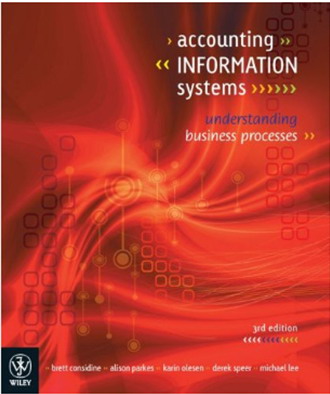 Brett Considine, Alison Parkes, Karin Olesen, Derek Speer, Michael Lee
John Wiley & Sons Australia (2010)
ISBN: 978-1-74216-555-4
by: Harijanto Pangestu
Matakuliah Informasi dan Proses Bisnis adalah matakuliah yang diberikan untuk mahasiswa semester dua. Matakuliah ini termasuk dalam rumpun Fundamental Information System. Matakuliah ini sangat penting sekali karena matakuliah ini merupakan dasar untuk matakuliah di semester berikutnya. Khusus untuk Jurusan Sistem Informasi, matakuliah yang terkait erat dengan matakuliah ini adalah Information System Development diberikan di semester dua juga, Information System Analysis and Design di semester tiga, Advanced Information System Analysis and Design diberikan di semester empat, dan Information System Minor Project diberikan di semester lima bahkan untuk peminatan Applied ERP yang dimulai di semester empat mensyaratkan nilai matakuliah Informasi dan Proses Bisnis harus grade ”A’. Bila melihat Course Structure maka dapat disimpulkan bahwa hampir semua matakuliah berkaitan erat dengan matakuliah Informasi dan Proses Bisnis.
Matakuliah ini mempelajari tentang transaction processing, ethics, fraud, and internal control, the revenue cycle, the expenditure cycle, the conversion cycle, The Human Resource management and Payroll Cycle, financial reporting and management reporting systems, the REA approach to database modeling, system documentation, enterprise resource planning systems. Topik yang menjadi fokus matakuliah ini adalah the revenue cycle, the expenditure cycle dan the conversion cycle, dan , The Human Resource management and Payroll Cycle yang masing-masing memiliki sub siklusnya. System documentation yang terdiri dari Process map, Data flow diagrams (DFDs), Systems Flowchart serta REA merupakan materi yang harus dipahami untuk memberikan gambaran mengenai siklus beserta sub siklus di atas.
Buku Accounting Information Systems: Understanding Business Processes merupakan buku wajib matakuliah Informasi dan Proses Bisnis untuk semester ini. Buku tersebut diharapkan dapat memenuhi materi yang ingin dicapai di matakuliah ini. Buku Accounting Information Systems: Understanding Business Processes merupakan buku wajib yang dipakai di beberapa universitas di Australia antara lain Macquarie University, The University of Melbourne, Auckland university, The University of Western Australia, The Australian National University, The University of Tasmania, University of Ballarat, University of Technology Sydney, Victoria University of Wellington di New Zealand dan masih banyak di tempat lain.
Untuk topik Ethics, Fraud, and Internal Control dan The REA Approach to Database Modeling diambil dari buku Accounting Information Systems karangan James A. Hall edisi ke enam. Sedangkan sebagai buku ke dua dipakai buku Integrated Business Processes with ERP Systems karangan Simha R. Magal edisi pertama. Dengan adanya buku-buku teks yang bermutu ini harapkan dapat menunjang matakuliah Informasi dan Proses Bisnis menjadi lebih baik.
Comments :